
Pankind 2026 research grants announced
Earlier detection.
Better treatments.
A fairer chance.
Pankind is investing $3.8 million in 16 Australian research projects to find pancreatic cancer earlier and find better treatments. It’s our largest grant round yet, made possible by our community.

$3.8 million
invested
16
projects
8
research areas
Our annual grant round is where our community’s generosity becomes research. This year marks our largest grant round to date, with $3.8 million invested in 16 projects at 13 organisations across four states – $1.3 million more than last year. Congratulations to every funded team.
Finding pancreatic cancer sooner is a priority for our community. This year, we’ve more than doubled our investment in early detection and awarded our first four Early Detection Accelerator Grants, helping promising research move closer to clinical application.
Pancreatic cancer is complex, and there is no single solution. This year’s projects span eight key areas of research, from developing a blood test for people at higher risk to vaccines that train the immune system and a first-in-human trial of an implant that delivers chemotherapy directly into the tumour.
From early-stage discovery to clinical trials, these projects are building the knowledge and evidence needed to detect pancreatic cancer earlier, develop more effective treatments and improve survival.
2026 research projects
Every project is working towards earlier detection or better treatments. Summaries are written by Pankind in plain English, based on each team’s public summary; project titles and full details are on each project page.
Early detection accelerator grants
New for 2026. Up to $300K over two years to move developed early detection research towards clinical use.

Professor Rachel Neale
QIMR Berghofer, Qld
Making the case for pancreatic cancer screening
Some people have a higher chance of pancreatic cancer because of their genes or family history. Screening could save lives, but it isn’t always funded. This team will model how many Australians are at high risk, how many lives screening could save, whether the benefits outweigh the risks, and which groups it would be cost-effective to screen.

Associate Professor Gillian Lamoury
Northern Sydney Local Health District, NSW
A blood test to support high-risk monitoring
People at higher risk of pancreatic cancer can be offered regular monitoring. This team is testing, with patients, whether a blood test that reads several kinds of molecular signals could be added to that monitoring to help find pancreatic cancer earlier.
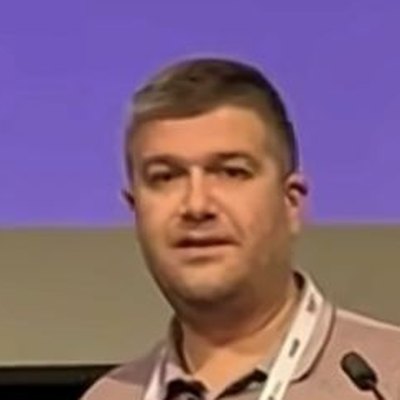
Dr Sasan Ahdi Rezaeieh
The University of Queensland, Qld
Checking the pancreas with radio waves
Detecting pancreatic cancer early is difficult because the pancreas sits deep inside the body. This team is testing whether a scanner that uses very low-energy radio waves, with sensors placed on the skin like a stethoscope, can pick up the changes pancreatic cancer causes. The long-term aim is a quick, low-cost, portable check, including for regional and remote clinics.

Dr Astrid Magenau
Garvan Institute of Medical Research, NSW
AI that reads the scar tissue around tumours
Pancreatic tumours grow inside stiff, scar-like tissue. Its collagen pattern differs between people and may affect how the cancer grows and responds to treatment, but it isn’t measured at diagnosis. Using Cabana, an AI tool the team built, they will create a risk score called SCAR from routine biopsies. It could flag people who may benefit from adding anti-fibrotic drugs to chemotherapy.
New treatment accelerator grants
Up to $300K over two years to fast-track advanced research from the lab towards clinical trials.

Professor Phoebe Phillips
UNSW Sydney, NSW
Closing the escape routes around new KRAS drugs
Daraxonrasib is a new drug that blocks KRAS, a major driver of pancreatic cancer, but many tumours eventually find ways around it. Using samples from MoST-P, Australia’s largest precision medicine program for pancreatic cancer, the team will map these escape routes and test drug combinations that block them.

Dr Annalisa Carli
Olivia Newton-John Cancer Research Institute, La Trobe University, Vic
Turning the tumour’s helpers back
Pancreatic tumours can take over immune cells called macrophages, turning them into helpers that build a shield around the cancer. The team found that a protein called HCK controls these cells, and has developed a more precise drug to block it. They will test whether it slows tumours and helps existing treatments work better.
Made possible by Woolworths’ Woolies, Wheels & Walks initiative, in partnership with Tour de Cure.
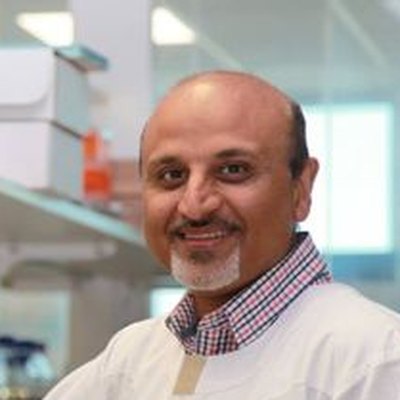
Professor Rajiv Khanna
QIMR Berghofer, Qld
One mRNA vaccine, several KRAS targets
A therapeutic mRNA vaccine designed to train the immune system to recognise and destroy pancreatic cancer cells. Tumours carry different KRAS changes and can change over time, so this vaccine targets several of the most common ones at once. The work lays the foundation for future clinical trials.

Professor Bernd Rehm
Griffith University, Qld
A fast, low-cost vaccine platform
A new therapeutic vaccine platform that uses modified bacteria to make tiny, biodegradable particles carrying cancer markers, helping the immune system spot the cancer. It is designed to be made quickly and at low cost, as a ready-to-use or personalised vaccine.

Professor Paul Timpson
Garvan Institute of Medical Research, NSW
Clearing a path for CAR T cells
CAR T-cell therapy has transformed some blood cancers but struggles against pancreatic tumours, partly because scar tissue blocks immune cells. The team will pair its next-generation CAR T cells with KD025, a drug already approved in the US for other conditions, to break down that tissue first.
Made possible by Woolworths’ Woolies, Wheels & Walks initiative, in partnership with Tour de Cure.

Dr Motilal Mathesh Shanmugam
Deakin University, Vic
Tiny self-propelled drug carriers
Thick, scar-like tissue stops medicines reaching cancer cells deep inside pancreatic tumours. This team is testing whether tiny, self-propelled drug carriers can move through that barrier and deliver treatment more evenly and precisely.

Professor Morteza Aghmesheh
Prince of Wales Hospital, NSW
A first-in-human implant trial
A first-in-human trial of a biodegradable implant placed directly into the tumour, where it slowly releases chemotherapy. It is for people whose tumour is found during surgery to be unsafe to remove. The trial will test safety and the right dose. The long-term hope is to shrink tumours enough for surgery.
Made possible by Woolworths’ Woolies, Wheels & Walks initiative, in partnership with Tour de Cure.
New treatment innovation grants
Up to $100K over one year to back bold early-stage ideas for new treatments, diagnostics or care.

Dr Mara Zeissig
SAiGENCI, Adelaide University, SA
Helping KRAS drugs work for longer
The team’s research shows most pancreatic cancers produce high levels of antioxidants that help them survive treatment. The team will investigate whether targeting this antioxidant defence alongside KRAS-blocking drugs such as daraxonrasib to help them work better and for longer.

Dr Douglas Campbell
GlyTherix, NSW
One molecule to find and treat cancer
Theranostics uses one molecule to both find and treat cancer, and has already changed care for prostate cancer. GlyTherix will develop a small molecule that targets GPC-1, a protein on pancreatic cancer cells and the tissue that shields them, for both scans and targeted radiation therapy.

Dr Emilie Jaune
The University of Queensland, Qld
Flags that help the immune system find cancer
The immune system often can’t tell pancreatic cancer cells from healthy ones. This team is studying circular RNAs, loop-shaped molecules that can make protein pieces found only in cancer cells. These could act as flags for the immune system and become targets for a future therapeutic vaccine.

Dr Andrea Di Pietro
Peter MacCallum Cancer Centre, Vic
B cells that open up the tumour
Pancreatic cancer keeps most immune cells out, but B cells can get in. The team has engineered B cells that recognise pancreatic cancer and only then release a therapeutic protein. The aim is to open up the tumour so other immune treatments, such as CAR T cells, work better.

Dr Daniel Croagh
Monash Health and Monash University, Vic
Gene testing as part of routine care
New targeted treatments depend on knowing a tumour’s genetic changes, but that testing isn’t routine at diagnosis. OnRAMP will build low-cost KRAS testing into routine care, using material from the diagnostic biopsy, and measure whether results arrive in time to help plan treatment.
How we choose what to fund
2026 is our 12th annual competitive grant round. Two steps make sure funding goes where it can change the most.
We fund what our community has asked for
Over the years, people impacted by pancreatic cancer have told us they want earlier detection and better treatments. These have been our two grant priorities since 2019, and we decide which types of grants to offer and how much goes to each.
Experts choose the best science
Our Scientific Advisory Panel, a group of leading scientists and clinicians, peer reviews every application with selected experts. Each is scored on the team’s ability to deliver, the novelty of the idea, its potential to improve survival, and its scientific quality and feasibility.
What our research funding has achieved
Research takes time, and early grants build momentum. Since 2008, with our community’s support, we’ve invested more than $23.8 million in 105 projects.
$23.8M+
invested in research
105
projects funded
21+
institutions
18 years
of funding research

CASE STUDY
Identifying new targets for pancreatic cancer treatment
In 2023 we awarded Professor Ricky Johnstone and Dr Jennifer Devlin at Peter MacCallum Cancer Centre a $300,000 New Treatment Grant to investigate how disrupting gene activity could stop pancreatic cancer cells from growing.
Their team found four proteins that pancreatic cancer cells rely on to grow and survive, highlighting promising new targets for drug development, and published the results in Molecular Cancer Therapeutics.